Your ROAS numbers are lying to you
Meta and Google both over-attribute. Without a real blended measurement model, your reported ROAS does not match the bank statement.

We run Google Ads, Meta, SEO, Klaviyo, and CRO for direct-to-consumer brands that want profitable scale. Every channel ties to blended ROAS and contribution margin.
5.0★★★★★21 reviews on Google










Meta and Google both over-attribute. Without a real blended measurement model, your reported ROAS does not match the bank statement.
Throwing more budget at Meta does not work past a ceiling. The brands winning right now run on creative volume, audience structure, and email LTV math.
Welcome, abandoned cart, browse abandonment, post-purchase, and winback flows are doing the heavy lifting for every profitable DTC brand. Most stores are missing 3 of the 5.
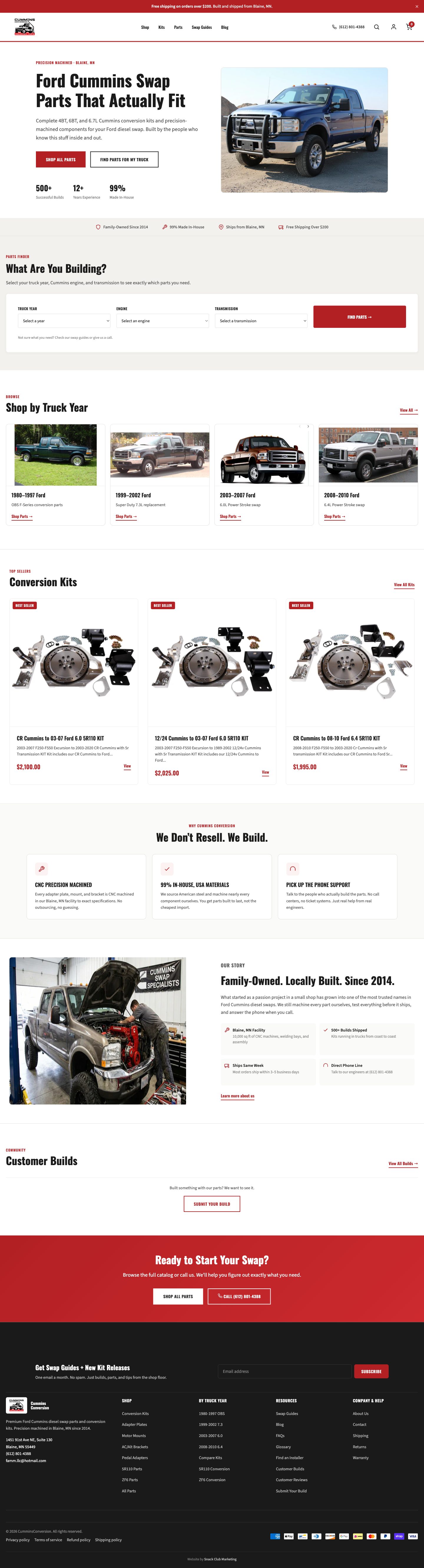
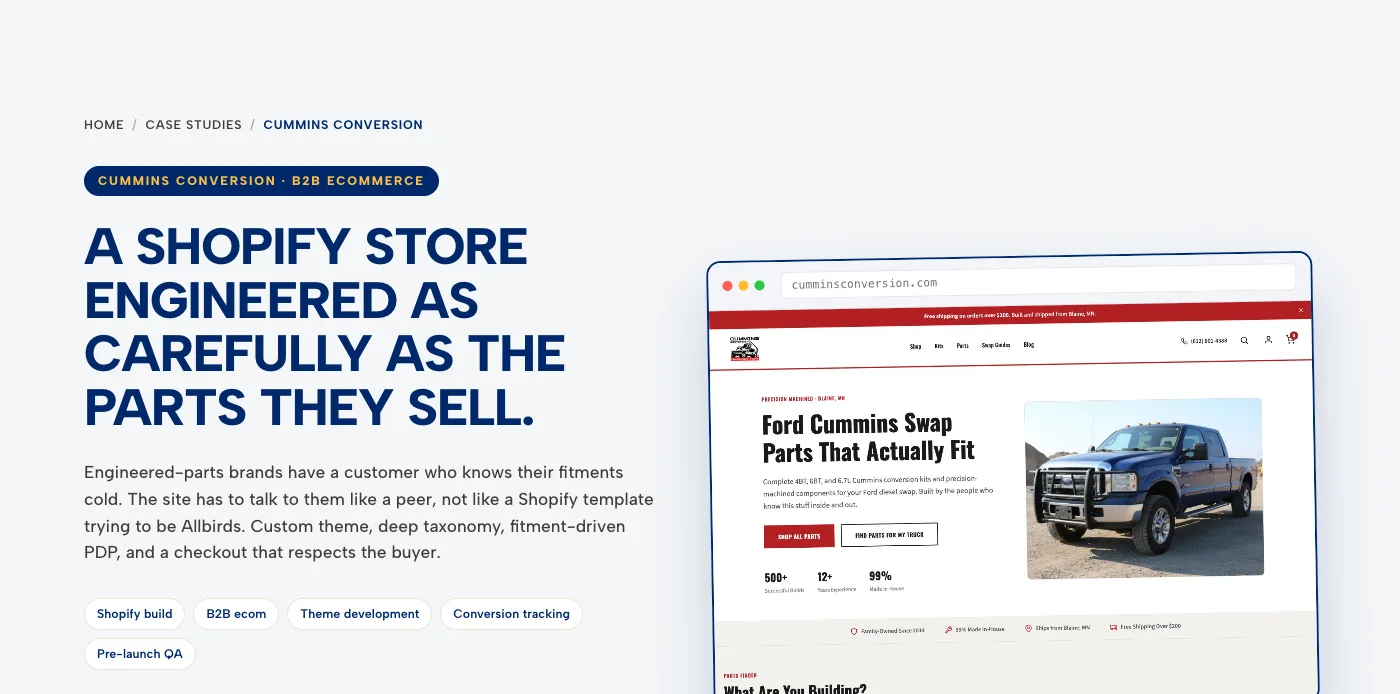
Cummins Conversion sells engineered diesel conversion parts to technicians who know their fitments cold. We built them a custom Shopify theme with fitment-driven product pages and conversion tracking QA'd before launch, then ran search alongside it.
Figures from Cummins Conversion's own store and search data (Shopify, Google Search Console, Ahrefs), March to May year over year.
Each one underperforms alone. A great ad pointed at a 1 percent product page is wasted spend. Strong flows with no new customers is a shrinking list. We run them as one system.

Google Shopping, Meta, and TikTok built around new-customer cost. We split prospecting from retargeting so you see what is buying growth, not what is taking credit for it.
Paid Media · Kevin the Cookie
Welcome, abandoned cart, post-purchase, and winback in Klaviyo. For most stores these flows recover 20 to 35 percent of revenue and cost nothing per send.
Email & Retention · Bobby the Banana
One model that ties Meta, Google, and email back to the bank statement. You scale on the number that reconciles, not the one each platform claims.
Track & Optimize · Kevin the Cookie
Layout, social proof, shipping clarity, and bundle math on the PDP. Moving conversion from 1.2 to 1.8 percent beats any bid change.
Websites · Dale the Donut
Repeat buyers cost 4 to 6 times less than new ones. Subscriptions and segmented campaigns that raise 90-day LTV, so you can pay more for the first order.
Paid Media · Kevin the Cookie
Collection and blog pages that rank for the searches above your branded terms. Slower than paid, but it lowers blended acquisition cost as it compounds.
SEO & Content · Pat the PretzelMost DTC brands we meet are flying on numbers that do not reconcile. Meta says one thing, Google says another, the bank statement says a third. We start by building a blended measurement model, so the revenue number you act on is the one that actually hit your account.
From there we run paid, SEO, email and SMS, and the conversion work on the store itself, all on Shopify and measured against contribution margin instead of platform-reported ROAS.
What our clients say

It’s been genuinely refreshing to work directly with another business owner instead of navigating a large agency structure. There’s a level of practical understanding, communication, and flexibility that comes from someone who simply gets the realities of running and growing a business firsthand.
I had a great experience working with Snack Club Marketing, especially Joe. They handled my website design, logo, and also helped with ads/marketing strategy, and I couldn’t be happier with how everything turned out.
Most brands we work with run between 15 and 30 percent of revenue across paid, email, and SEO retainers combined. Newer brands go higher to buy scale, mature brands trend lower. The number depends on margin and stage.
Paid scaling and Klaviyo flow recovery can move revenue inside the first 30 days. SEO compounds over 3 to 6 months. CRO wins compound monthly with each test.
We do not take Meta or Google at face value. We run server-side tracking, a blended model across channels, and a post-purchase 'how did you hear about us' survey, then reconcile against actual deposits. The number we optimize on is the one that matches your bank, which is usually lower than what the platforms claim. Here is how we set up server-side tracking.
We build and run them. Welcome, abandoned cart, browse abandonment, post-purchase, and winback get written, designed, and turned on, then we test subject lines and timing every month. We broke the whole setup down in the 5-flow Klaviyo stack.
No. We're month-to-month. If we're not earning it, you shouldn't have to keep paying. That's the same answer we give every client.
See if we're a fit. Fifteen minutes on what you're running and where you want it to go. If we're not the right team for it, we'll tell you.
Send your details. We'll reply within 24 hours to set up a time.